
/ Discernment
AI accelerates data delivery—but it shifts the failure point directly onto human judgment.
When automated systems flood workflows with data, human operators face severe information overload. They look directly at machine errors and physically cannot see them. We integrate precision stop-and-think steps to disrupt automated habit loops, preventing the blind passing of flawed software data into active operations.
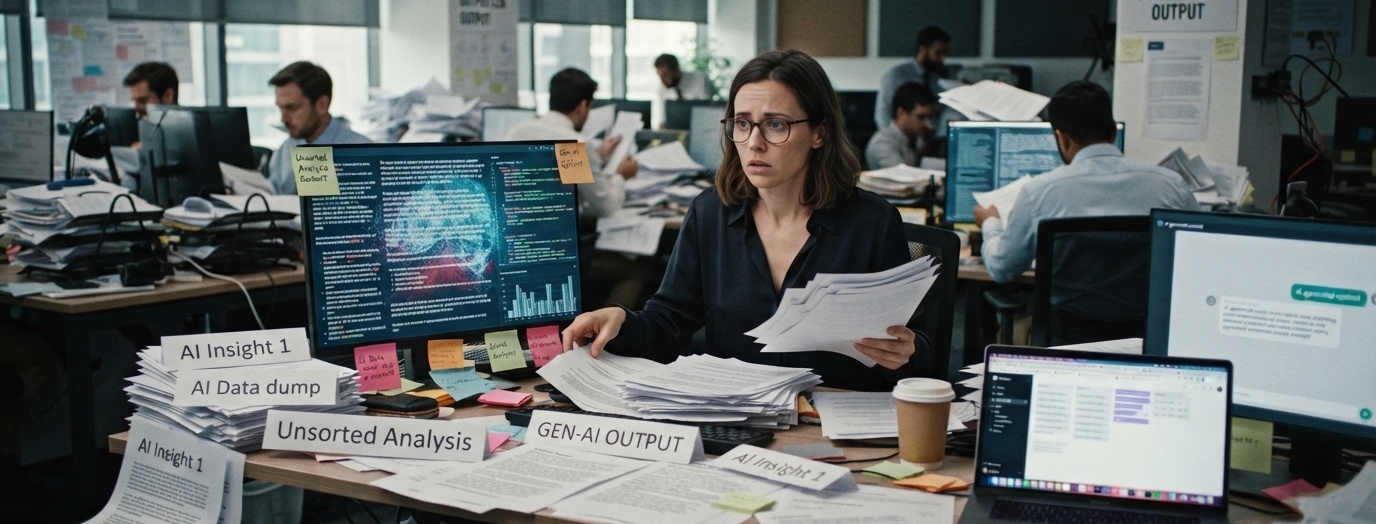


Two-thirds of employees who use AI at work have assumed its output is credible and accurate without fully evaluating it. Not because of lack of effort — because the moment that matters most, the pause to discern before accepting, has been engineered out of the workflow.
This is AI-generated output that looks finished but isn’t. It reads as competent and arrives fast, so it slides past scrutiny — until someone downstream has to find the error, unpick the decision, or wear the reputational cost. One global study estimates workslop costs a 10,000-person organisation close to US$9 million a year in lost productivity, in time spent by others cleaning up what should never have left the building.
The cause is not AI. The cause is a biological bandwidth limit that AI output arrives too fast to work around.
Technology performance is bound by human biology. While AI systems process and generate at machine speed, the end-user’s brain is still running on analog wiring. Under modern digital load, that gateway suffers from Busy Brain Syndrome (BBS) — and it doesn’t slow down, it shuts down.
System Saturation vs. Autopilot Circuit-Breaks
This isn’t the brain taking a shortcut. It’s the brain hitting a ceiling. Under fatigue, pressure, and volume, discernment doesn’t get skipped by choice — it goes offline as a biological response to overload. AI removes friction, and friction is where discernment used to live, but the deeper problem is that a brain in BBS state cannot reliably see the flaw at all, no matter how deliberate the person is trying to be. This isn’t a character flaw or a generational trait — it’s a predictable, measurable state, and it’s why people look directly at a flawed contract or a critical alert and don’t register it.
The solution is to enable your people to operationalise the innate human stop-and-think discernment skills that digital overload has annihilated. Our field-tested process allows individuals to re-engage their natural “discernment circuit-breaker” at the exact moment AI data is received. This re-activates the biological capacity to see errors, breaks the automated habit of blind approval, and stops the downstream drift of corrupted data.
Isolate the operational disconnect between Work-as-Imagined and Work-as-Done. We run a precise data-throughput audit across your high-stakes workflows, pinpointing the exact decision choke points, information deluge, and attention lapses stalling execution. This reveals exactly where your un-paced digital environment is actively hiding performance drag and structural risk.
Our field-tested process equips individuals to re-activate their natural "discernment circuit-breaker" at the exact moment AI data or heavy information loads hit their desk. By embedding precise stop-and-think steps directly into active shift routines, we disrupt the automated habit of blind approval and restore the biological capacity to spot critical downstream errors.
Establish permanent operational baselines backed by multi-year benchmarking data to insulate your workflows from systemic drift. We turn accurate, high-attention verification habits back into your workforce's default innate human operational capability—radically optimizing capacity return, protecting your reputation risk, and stopping the downstream drift of corrupted data.
Building a deliberate STOP-and-discern step into the workflow at the exact point AI output is received, before it’s acted on or passed downstream.
Stop paying twice for AI-assisted work—once to generate it, and a second time to unpick and fix it downstream. When individuals re-engage their innate "error discernment radar," they immediately flag flawed material, stopping it from propagating into final decisions, reports, or client-facing assets.
Stop costly operational slip-ups caused by blindly trusting automated outputs. Re-engaging an individual's innate "autopilot circuit-breaker" at the exact moment AI data is received ensures errors are flagged in real-time—permanently stopping a split-second oversight from becoming someone else's two-hour correction problem.
Passing unverified automated data downstream introduces severe operational variance and erodes client trust. Re-engaging individual discernment habits ensures your team actively verifies outputs, systematically protecting the execution integrity, credibility, and reputation of the entire organisation.
Attention lapses under intense digital load affect every tier of the enterprise—from early-career operators to senior executives. Re-activating this core skill restores sharp discernment as a permanent, default innate human operational capability, protecting your systemic throughput regardless of who is using the software.
/ evidence base
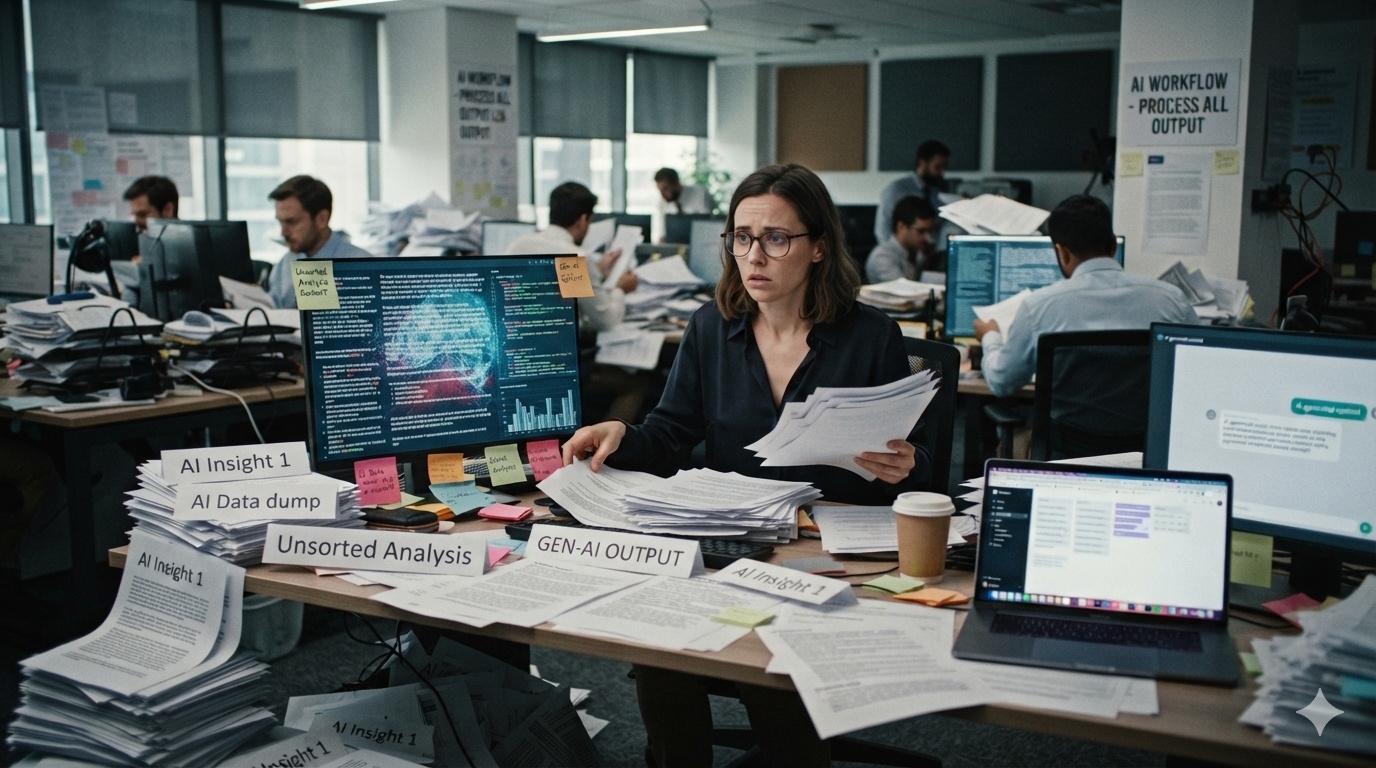
Stop paying twice for AI output — once to generate it, again to unpick it. Building the discernment checkpoint catches errors before they cost you, protects trust with every client and colleague, and turns AI from a liability into an edge.
When people are overloaded, decision-making slows, execution suffers, and strategic priorities get buried.
Discover what’s creating the drag—and what you can do about it.

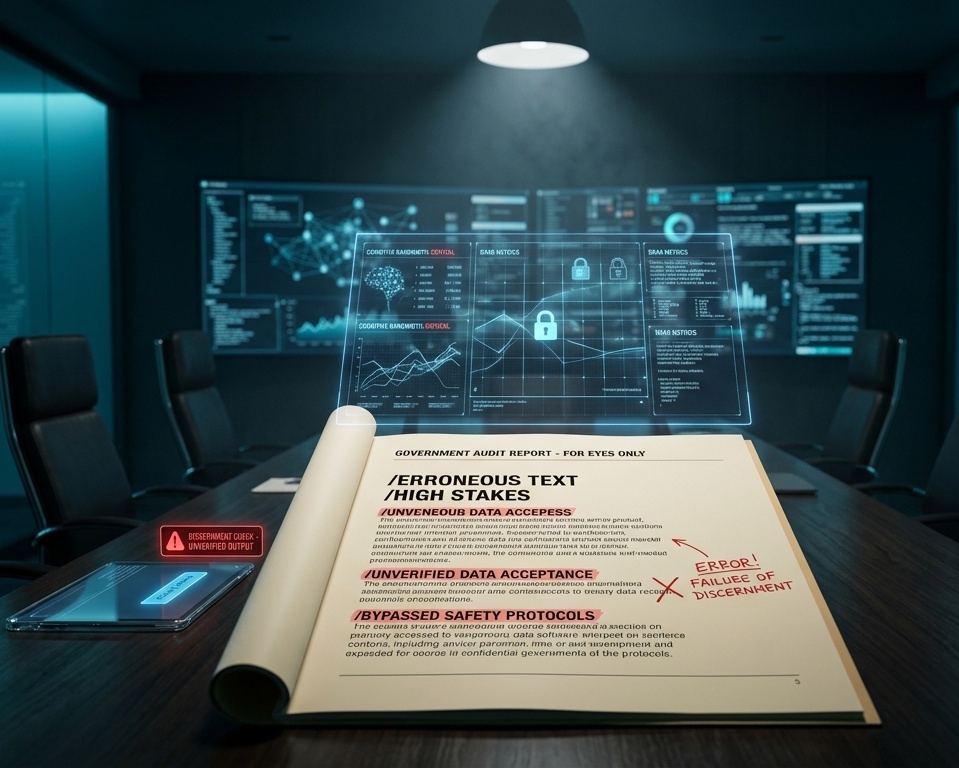
The Pattern: A consulting firm delivered a government report worth A$440,000. It contained multiple AI-generated errors. Nobody had checked before it went out the door. The firm formally apologised — publicly, on the record. This isn't a hypothetical risk. It already happened, to a firm with every resource to prevent it. The Mechanism: Two-thirds of employees who use AI at work have acted on its output without evaluating it first. Under time pressure, the brain defaults to the path of least resistance — and fluent, confident-sounding AI output is engineered to look finished. The checkpoint that would normally catch an error gets skipped, not because anyone was careless, but because nothing in the workflow demanded a pause. The Fix: A deliberate discernment checkpoint built into the moment AI output is received — before it's trusted, before it's passed on, before it's someone else's two-hour cleanup job. Global estimates put the cost of unchecked AI output ("workslop") at close to US$9 million a year for a 10,000-person organisation. The checkpoint costs a fraction of that to build in.